Quotex vs Pocket Option
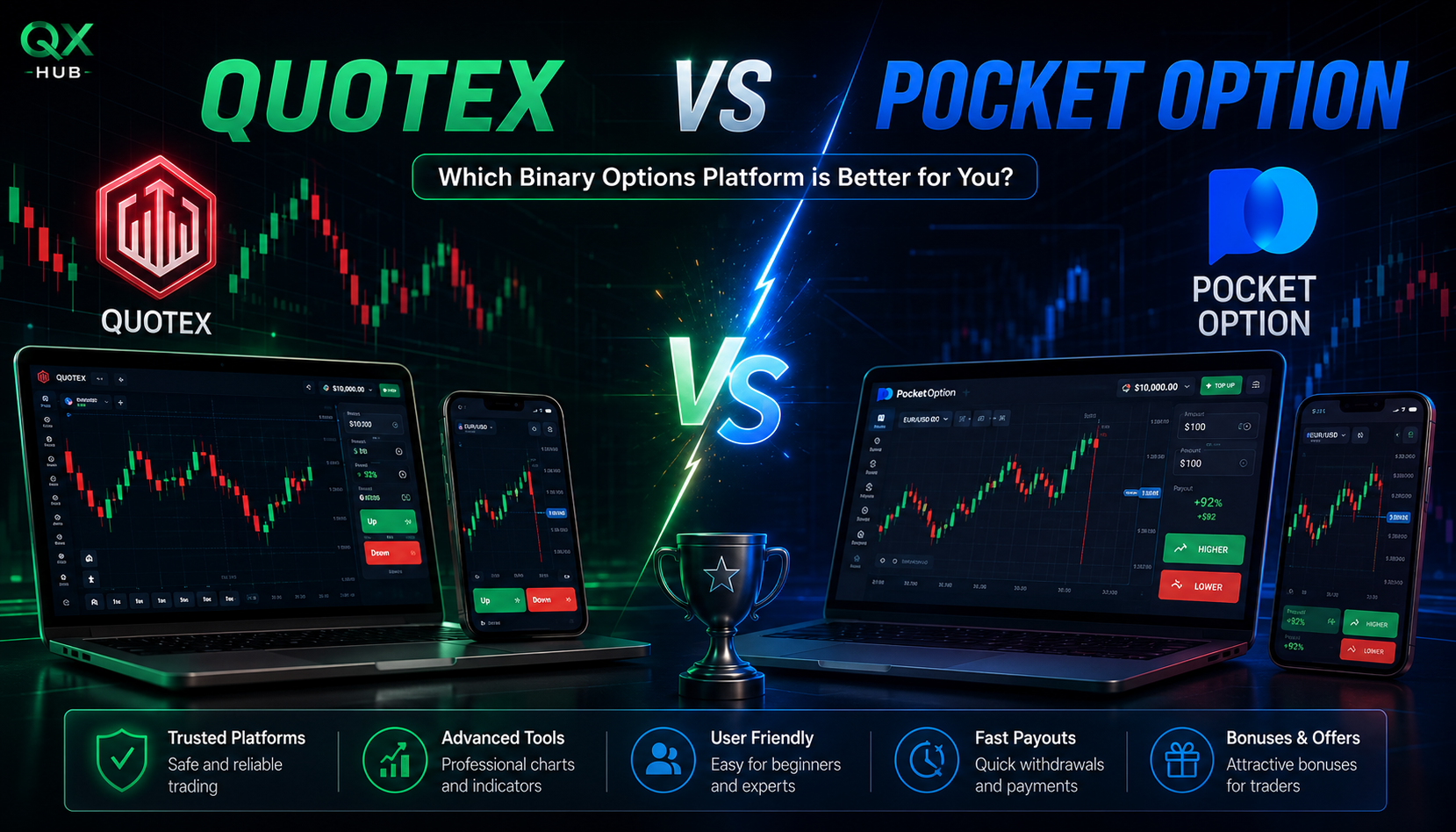
Quotex vs Pocket Option: which trading platform is better in 2026?
Quotex vs Pocket Option compared for 2026: demo accounts, minimum deposits, payouts, copy trading, withdrawals, KYC, bonuses, safety and the real trader verdict.
Quick answer
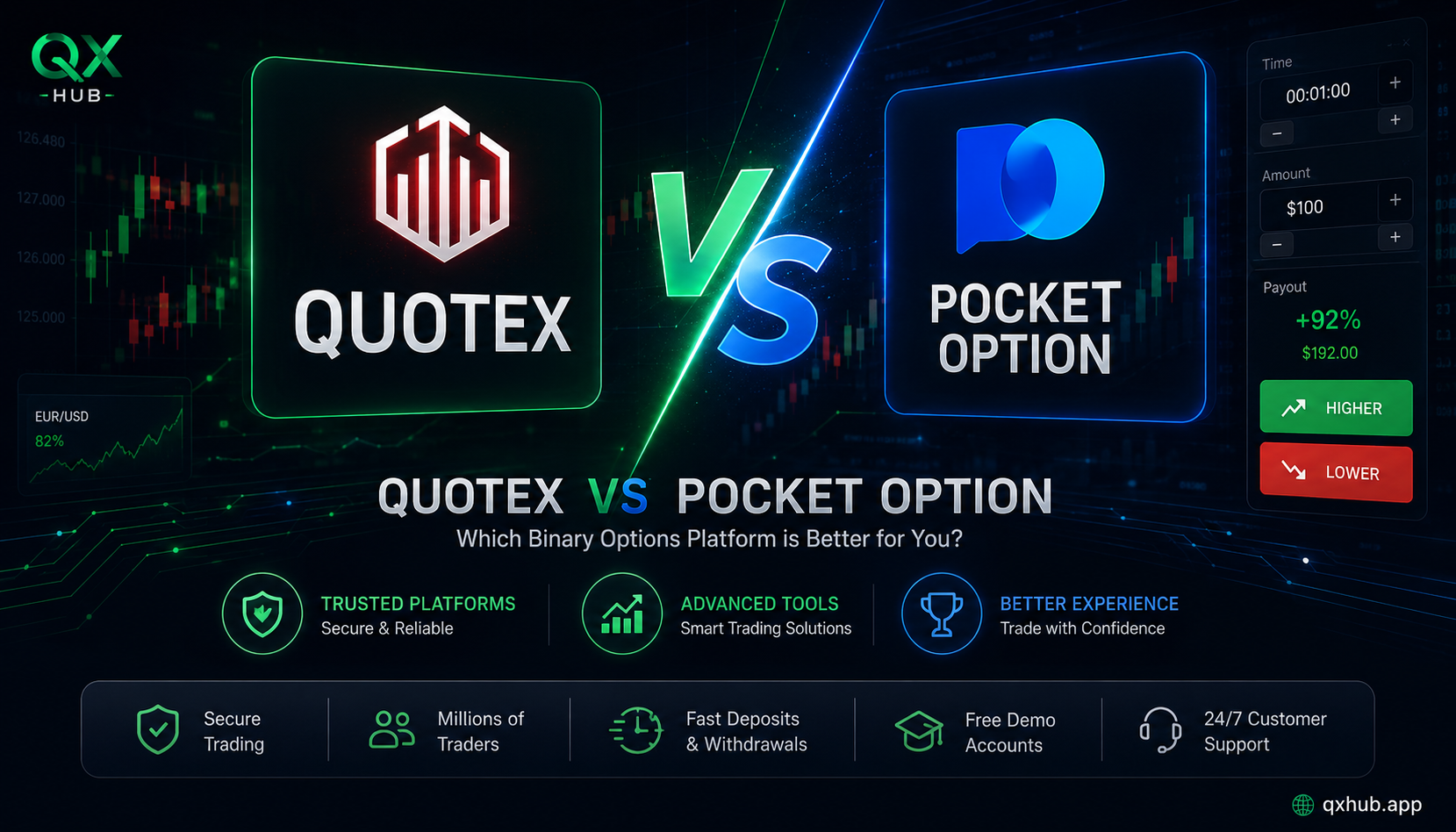
Quotex is the stronger choice for traders who want a clean chart-first terminal and manual decision-making. Pocket Option is stronger for users who want a bigger feature ecosystem: copy trading, social tools, tournaments and a lower advertised entry threshold. The professional choice is made only after checking country access, KYC, live payout, bonus rules and a small withdrawal.
- Quotex is usually easier to learn because the workflow is cleaner and less distracting.
- Pocket Option wins on social and copy-trading features, but that also adds strategy-provider risk.
- Minimum deposits and payouts can change by region, asset, method and account conditions.
- Before scaling either account, complete KYC and test a small withdrawal with your own payment method.
Quotex vs Pocket Option
Choose the broker route
Open the account only after the comparison is clear: one platform for fast fixed-return practice, the other for a broader trading workspace.

Clean manual route
Quotex
Quotex is usually easier to learn because the workflow is cleaner and less distracting.

Social and copy route
Pocket Option
Pocket Option wins on social and copy-trading features, but that also adds strategy-provider risk.
Quotex vs Pocket Option in one sentence
Quotex feels like a focused trading terminal: chart, amount, expiry, direction and fewer distractions. Pocket Option feels like a larger trading ecosystem with social features, copy trading, tournaments, achievements and a busier account area. If you want to train manual discipline, Quotex is usually the cleaner start. If you want community tools and copy mechanics, Pocket Option has the broader feature set.
Why this comparison matters
Both platforms target traders who want short-duration fixed-time or binary-options-style contracts. That makes the decision look simple from the outside: choose an asset, pick Higher or Lower and wait for expiry. In reality, the platform changes your behavior. A clean screen can reduce mistakes; a feature-heavy screen can create more opportunities, but also more noise.
Interface and trading workflow
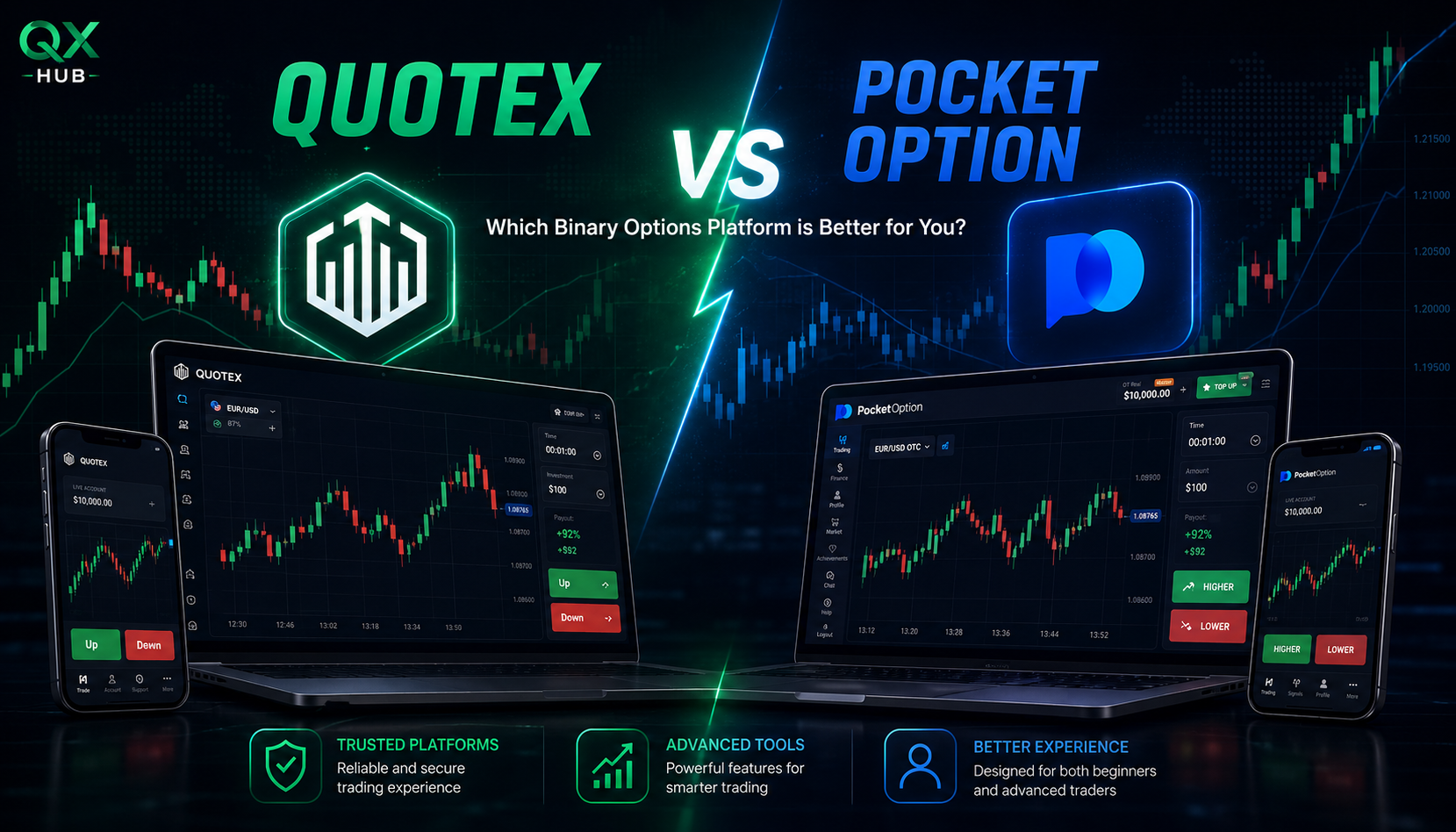
Quotex keeps the main decision close to the chart. That helps beginners build a repeatable routine: read structure, set the amount, choose expiry and execute only when the setup is clear. Pocket Option is still accessible, but it puts more platform layers around the chart: social feed, copy tools, contests and rewards. Those tools can be useful, but they can also push a trader to click more often than the plan allows.
Demo account and minimum deposit
Quotex advertises a $10,000 demo balance and a $10 minimum deposit. Pocket Option advertises a larger demo balance and deposits from $5 in some conditions. Treat these numbers as account-level facts to recheck before funding, because payment method and country can change the final minimum. The strongest demo test is not the biggest virtual balance; it is a demo routine that matches your real deposit size.
Assets, payouts and break-even math
Both platforms can show currency pairs, crypto, commodities, indices and OTC instruments, but the live list changes by session and region. Payouts are dynamic as well. A higher payout lowers the break-even win rate, but it does not make a bad setup good. A trader should check the exact payout on the exact asset at the exact time of trading, then skip sessions where the math no longer supports the strategy.
Indicators, signals and chart tools
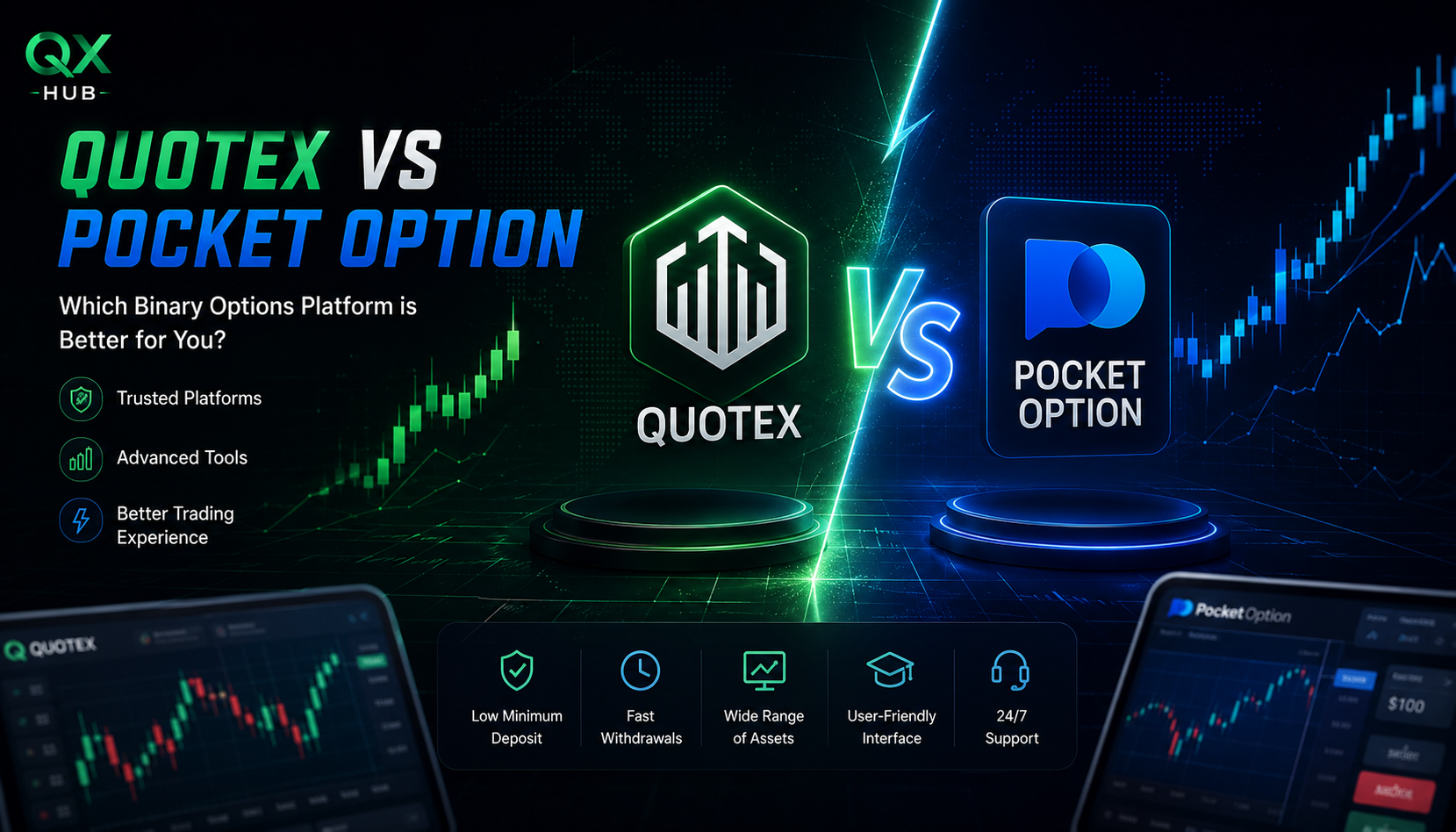
For technical analysis, both platforms cover the essentials: candles, timeframes, indicators and drawing tools. Use them simply. A trend filter, a momentum filter and clean support or resistance are enough for a beginner test. Built-in signals can be a study aid, but no signal replaces a tested setup, screenshot journal and fixed risk per trade.
Copy trading and social features
This is Pocket Option's clearest functional advantage. Copy trading can help users observe trade frequency and asset selection, but it also creates dependence on another trader's risk behavior. Rankings can be inflated by short lucky streaks, oversized positions or martingale logic. If you copy anyone, start on demo or with the smallest practical allocation and stop when the provider's behavior changes.
Deposits, withdrawals and KYC
The safest funding workflow is the same for both platforms: one account, accurate personal data, your own payment method, KYC as early as possible, a small first deposit and a small withdrawal test before increasing size. Many negative reviews around this industry mention verification delays, bonus restrictions, payment ownership problems and withdrawal disputes. Do not wait for a large balance to discover the rules.
Bonuses and promotions
Bonuses can make the account look larger, but they often add turnover rules, expiry windows or restrictions. If your goal is to test reliability, skip aggressive bonuses until the withdrawal route is proven. A smaller unrestricted balance is easier to manage than a bigger balance tied to conditions you have not calculated.
Final verdict
Choose Quotex if you want a calmer manual terminal and fewer distractions while learning structure, expiry and discipline. Choose Pocket Option if you deliberately want social trading, copy tools, contests and a broader interface. Choose neither if fixed-time contracts are restricted in your country, if you need top-tier investor protection, or if you cannot stop after a daily loss limit.
Quick answers
Is Quotex better than Pocket Option?
Quotex is better for a clean manual workflow. Pocket Option is better for copy trading, social tools and a broader platform ecosystem.
Which platform has the lower minimum deposit?
Pocket Option often advertises deposits from $5, while Quotex commonly advertises $10. The real minimum can vary by country and payment method.
Which demo account is better?
Pocket Option advertises a larger virtual balance, while Quotex gives a cleaner manual practice environment. The better demo is the one you use with realistic stake size and a journal.
Does Quotex have copy trading?
Copy trading is not the core Quotex feature. Pocket Option is the stronger choice if social or copy trading is central to your plan.
Can either platform guarantee profit?
No. Fixed-time trading is high risk, payouts are asymmetric and no indicator, signal, bot or copied trader can guarantee profit.
Are Quotex and Pocket Option regulated like major brokers?
They should not be treated like top-tier FCA, ASIC or CySEC-style investment brokers. Check current entity, legal access and country restrictions before funding.
Which one is better for beginners?
Quotex is usually easier for beginners who need fewer distractions. Pocket Option may fit beginners who specifically want social features, but copying others is not education.
What should I check before depositing?
Check the official domain, local legality, account terms, KYC requirements, bonus restrictions, payment ownership rules and withdrawal procedure.
How should a beginner use Quotex vs Pocket Option?
Treat Quotex vs Pocket Option as a decision filter, not as a signal by itself. Start with the page's main idea: Quotex is usually easier to learn because the workflow is cleaner and less distracting. Then check one chart, one timeframe and one amount on demo before any real-money step.
What should I check before applying Quotex vs Pocket Option in one sentence?
Check whether the market still matches the section "Quotex vs Pocket Option in one sentence", whether Pocket Option wins on social and copy-trading features, but that also adds strategy-provider risk. is true on the chart and whether your amount fits the planned risk. If one part is missing, skipping is the professional choice.
Next step
If the comparison is clear, continue with the broker that fits your trading routine. Review the full broker page first, then open the account through the protected route.