Decision guides / Quotex demo account vs real account
Quotex demo account vs real account: when to switch
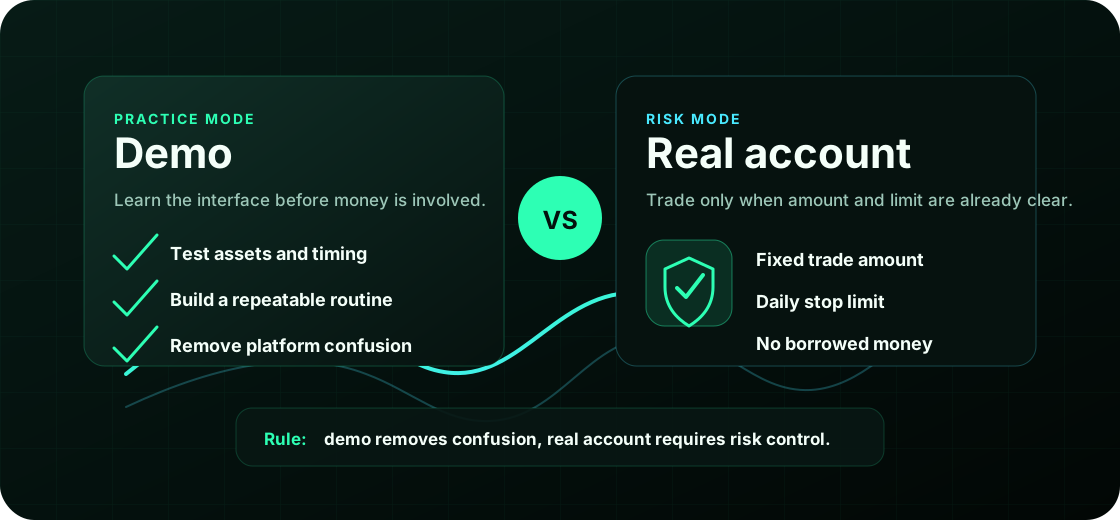
The demo account is where a beginner learns the platform. The real account is where discipline is tested. The switch should happen only after the routine is clear, the amount is fixed and the trader can handle a losing trade without chasing recovery.
Open Quotex from the right place
Pick the action that matches your current step and keep the demo, trade amount and risk limit clear before funding.
How to use this route
Demo account purpose
Use the Quotex demo account to learn the interface, expiry timing, chart rhythm and trade history. The goal is not to create a fantasy balance. The goal is to make the same clean decision many times without pressure.
What changes on a real account
Real money changes behavior. The same trader who waits calmly on demo may rush when a deposit is involved. That is why the first real step should be small, planned and separated from essential money.
When demo results are useful
Demo results are useful when they come from a written setup: one asset, one timeframe, one expiry logic and one reason to skip. They are weak when they come from random clicks, huge virtual stakes or switching markets every minute.
When not to switch yet
Do not switch because of one winning streak. Wait if you are increasing size after losses, entering without a reason, ignoring news or feeling that every missed candle is a lost opportunity.
How to make the first real step
If the routine is stable, use a modest amount, keep the session short and write the result after each trade. The first real goal is not income. It is proving that the demo discipline survives real pressure.
Best next route
Use registration for a full account start, fast entry when the account is already familiar and Android only for planned mobile checks. Access is useful, but the trading rule still comes first.
Demo account vs real account: what actually changes
Use the demo account to learn the interface, expiry timing, trade history and the feeling of waiting for a result. The useful question is not how fast the balance grows, but whether the same rule can be repeated without random clicks.
A real account adds deposit choices, withdrawal expectations and emotion after losses. That pressure can change the same trader's behavior, so the first real step should be small, planned and separated from essential money.
Before moving from demo to real, a beginner should have one tested setup, a fixed amount, a daily stop, a written no-trade rule and proof that losses do not trigger larger stakes.
- Quotex demo account vs real account is an access question and a discipline question at the same time.
- Demo trading should create a routine before real-money pressure appears.
- The clean switch is based on process, not on one lucky demo streak.
Decision checklist
- One demo setup has been tested through wins and losses.
- The first real amount is fixed before the session.
- A daily stop and pause rule are written down.
- The trader can skip unclear candles without frustration.
- Deposit and withdrawal rules have been checked.
Quick answers
Is the Quotex demo account the same as a real account?
No. Demo helps with practice and interface learning, while a real account adds money pressure, payment rules and stronger emotional reactions.
When should a beginner switch from demo to real?
Only after one setup is repeatable, the amount is fixed, a loss limit is written and the trader can stop after mistakes.
Can demo profit prove that I am ready?
No. Demo profit is useful only when it comes from a consistent rule, not random clicks or oversized virtual trades.
How much should the first real trade be?
It should be small enough that a loss does not change the next decision. The exact amount depends on the trader's personal risk limit.
Should I deposit right after registration?
A calmer route is registration, demo practice, payment-rule check and only then a small real step if the routine is stable.
Is Android good for demo practice?
Android can help with planned checks, but mobile access should not turn boredom or notifications into trades.
What is the biggest warning sign before switching?
Trying to recover losses, increasing stake after mistakes or feeling unable to skip unclear setups.