best Quotex indicators
Best Quotex Indicators: EMA, RSI, MACD & Bollinger Bands
Compare the best Quotex indicators for trend, momentum and volatility. Learn when EMA, RSI, MACD and Bollinger Bands help, create noise and need demo testing.
Quick answer
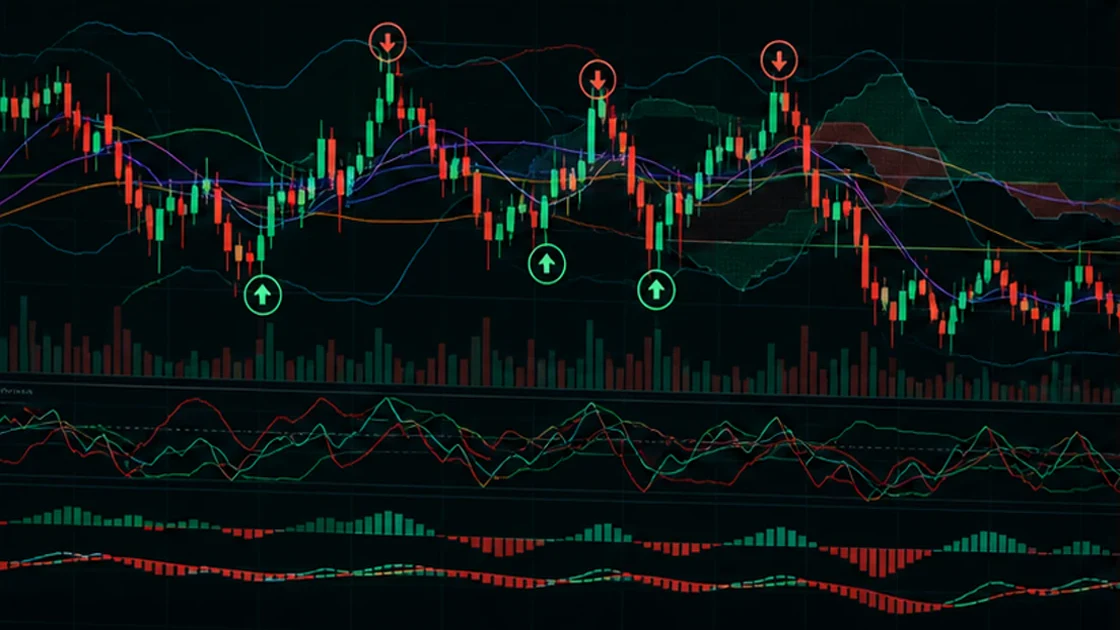
The best Quotex indicators are not magic buttons. A moving average helps read trend, RSI reads momentum pressure, MACD or Awesome Oscillator can show impulse, and Bollinger Bands can show volatility. The edge comes from combining one or two tools with price behavior, support and resistance, expiry timing and fixed risk.
- Indicators are lenses for reading the chart, not profit guarantees.
- A simple stack is often enough: one trend tool, one momentum tool and price-action confirmation.
- Do not add five indicators that repeat the same message.
- Every indicator idea should be tested on demo before real money.
1. Indicators are tools, not a trading brain
An indicator does one honest job: it converts price data into a cleaner visual clue. It can smooth a trend, show momentum, measure volatility or warn that a move is tired. It cannot know your risk limit, your emotional state or whether the next candle will behave. Treat every indicator as a helper beside the chart, not as the chart itself.
2. Moving averages for trend direction
Moving averages are useful when the first question is simple: is price generally rising, falling or moving sideways? On Quotex, many beginners use an EMA or SMA to avoid fighting a clear trend. If price is above the average and the average is rising, upward ideas deserve more attention. If price is below it and the average is falling, downward ideas become cleaner. In a flat market, the moving average often becomes noise.
3. RSI for momentum and exhaustion
RSI helps read whether momentum is stretched. The classic zones are 70 for overbought and 30 for oversold, but good traders do not enter only because a number appears. In a strong trend, RSI can stay stretched longer than a beginner expects. The stronger use is to combine RSI with a level, a candle close and the rhythm of the move.
4. MACD and Awesome Oscillator for impulse
MACD and similar impulse tools can help you see whether the move is gaining or losing strength. Crossovers, histogram changes and zero-line behavior can be useful, but they often arrive after price has already moved. That is why they work better as confirmation than as the first reason to enter. Price action should lead; the indicator should agree.
5. Bollinger Bands and volatility
Bollinger Bands show how wide or quiet the market feels. Wide bands warn that volatility is high and candles may stretch quickly. Narrow bands warn that energy is compressing and a breakout may appear. A touch of a band is not an automatic reversal. It is an invitation to ask a better question: is price rejecting the edge, breaking with strength or simply drifting inside a range?
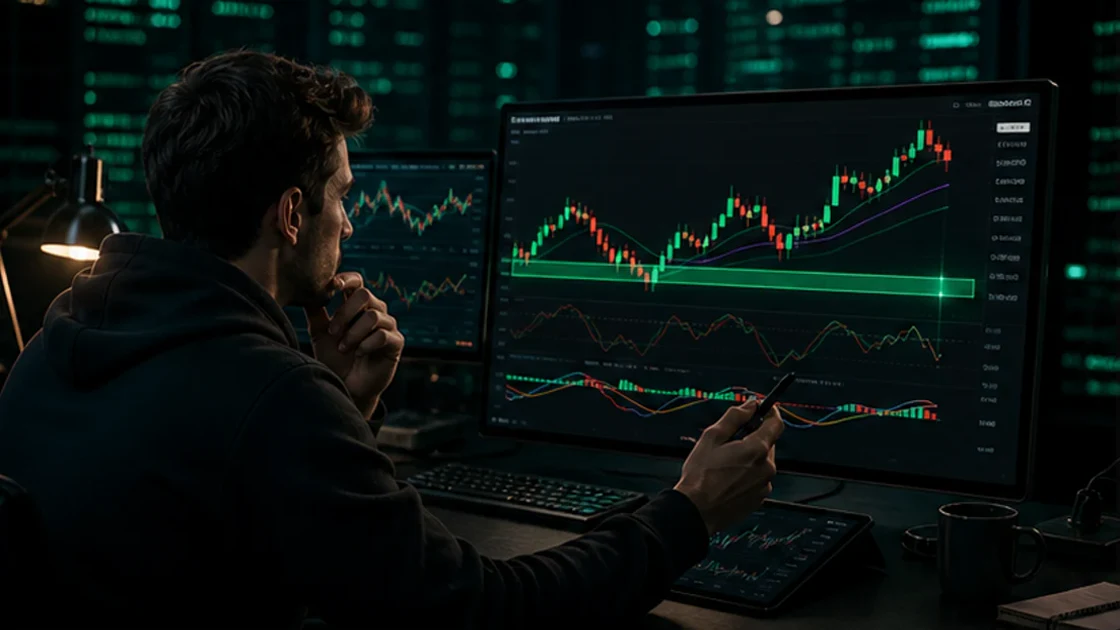
6. Support and resistance still come first
The cleanest indicator setup usually sits near a visible level. A moving average bounce in the middle of nowhere is weaker than a bounce from support with a candle close and momentum agreement. A Bollinger rejection is stronger when it appears near resistance. Levels give the trade idea a place; indicators help judge the quality of that place.
7. Expiry timing and indicator lag
Most indicators use past candles, so they naturally lag. On short expiries this matters. If the signal arrives after a long candle, the easy part of the move may already be gone. A calmer habit is to match expiry to chart rhythm: look at how many candles a normal swing lasts, avoid entering at the last breath of a move and skip messy candles before major news.

8. Demo routine for twenty indicator setups
Choose one simple stack, such as EMA plus RSI or moving average plus Bollinger Bands. Test twenty examples on demo before raising the pressure. Record the asset, timeframe, trend, level, indicator signal, expiry, result and whether the entry felt rushed. After twenty examples, you will know far more than any random indicator list can teach.
9. Indicator settings should match the chart
A copied setting is only a starting point. A fast moving average may react well on one timeframe and produce constant whipsaws on another. A slower setting can make the chart cleaner but confirm the move later. Change one variable at a time on demo, keep screenshots and judge the setting across a full sample rather than one attractive trade.
10. A simple indicator decision tree
First decide whether price is trending, ranging or chaotic. In a trend, use a moving average for direction and RSI or MACD for confirmation near a level. In a range, Bollinger Bands and visible support or resistance can help frame the edges. If the chart is chaotic and tools disagree, the decision tree ends with no trade.
Practical route for best Quotex indicators
Use this route after reading the guide. It turns best Quotex indicators into a repeatable routine: one idea, one chart check, one risk limit and one clear Quotex action instead of impulsive entries.
- Compare the best Quotex indicators for trend, momentum and volatility. Learn when EMA, RSI, MACD and Bollinger Bands help, create noise and need demo testing.
- A simple stack is often enough: one trend tool, one momentum tool and price-action confirmation.
- Moving averages for trend direction
- RSI for momentum and exhaustion
Write the reason you opened this page in one sentence. Compare it with the guide's core point: Indicators are lenses for reading the chart, not profit guarantees. If the reason is still vague, stay on demo and sharpen the rule before touching a live balance.
Open one asset and connect the idea with the section "Indicators are tools, not a trading brain". Do not jump between markets. A clean rehearsal means the same timeframe, the same expiration logic and the same condition for skipping the trade.
Before any real click, set the amount, the daily stop and the maximum number of attempts. Keep this filter beside the chart: Trading involves risk. Compare the platform, read the rules and never trade funds you cannot afford to lose. A strong trader protects attention first, capital second and ego never.
If the checklist still holds, use the most relevant path: Registration. If the context changes, compare it with Fast entry or Android app. The best route is the one that matches the reader's goal, not the loudest button.
Use the guide like a trading plan
A visitor searching for best Quotex indicators usually needs a direct answer, not hype. This guide connects that question with Compare the best Quotex indicators for trend, momentum and volatility. Learn when EMA, RSI, MACD and Bollinger Bands help, create noise and need demo testing. and keeps the focus on the decision a beginner actually has to make next.
A calm trader does not turn one paragraph into a signal. Read the key points, compare them with the chart, then ask whether timing, amount and risk still agree. The strongest idea in this page is simple: Indicators are lenses for reading the chart, not profit guarantees.
When the idea is clear, move in order: open the right Quotex route, practise the workflow on demo and only then decide whether Registration, Fast entry or Android app fits the session. If the rule feels rushed, the better decision is patience.
- A simple stack is often enough: one trend tool, one momentum tool and price-action confirmation.
- Do not add five indicators that repeat the same message.
- Every indicator idea should be tested on demo before real money.
- Trading involves risk. Compare the platform, read the rules and never trade funds you cannot afford to lose.
Quick answers
What are the best indicators for Quotex?
For many beginners, moving averages, RSI, MACD and Bollinger Bands are enough. The best choice depends on whether the market is trending, ranging or volatile.
Can indicators guarantee profitable trades?
No. Indicators help read conditions, but every trade still needs risk control, timing and discipline.
How many indicators should I use on one chart?
Usually one to three is enough. Too many tools often repeat the same information and make decisions slower.
Is RSI good for short trades on Quotex?
RSI can help, but it should be combined with a level, candle confirmation and sensible expiry timing.
Should I test indicators on demo first?
Yes. Demo testing helps you learn how an indicator behaves before real money and emotion are involved.
What indicator settings should beginners use?
Start with a common default, then test it on one asset and timeframe. The useful setting is the one that stays readable across a sample, not the one that explained the last trade.
Can I combine EMA, RSI and MACD?
You can, but give each tool a separate job and avoid entering only because all three flash at once. Direction, level, candle behavior and risk still matter.
How should a beginner use best Quotex indicators?
Treat best Quotex indicators as a decision filter, not as a signal by itself. Start with the page's main idea: Indicators are lenses for reading the chart, not profit guarantees. Then check one chart, one timeframe and one amount on demo before any real-money step.
Next step
Choose a topic by task: brokers for platform selection, guides for access, strategies for setups, risk for discipline and investing for longer market logic.