how to backtest a binary options strategy
How to Backtest a Binary Options Strategy: Data, Metrics and Validation
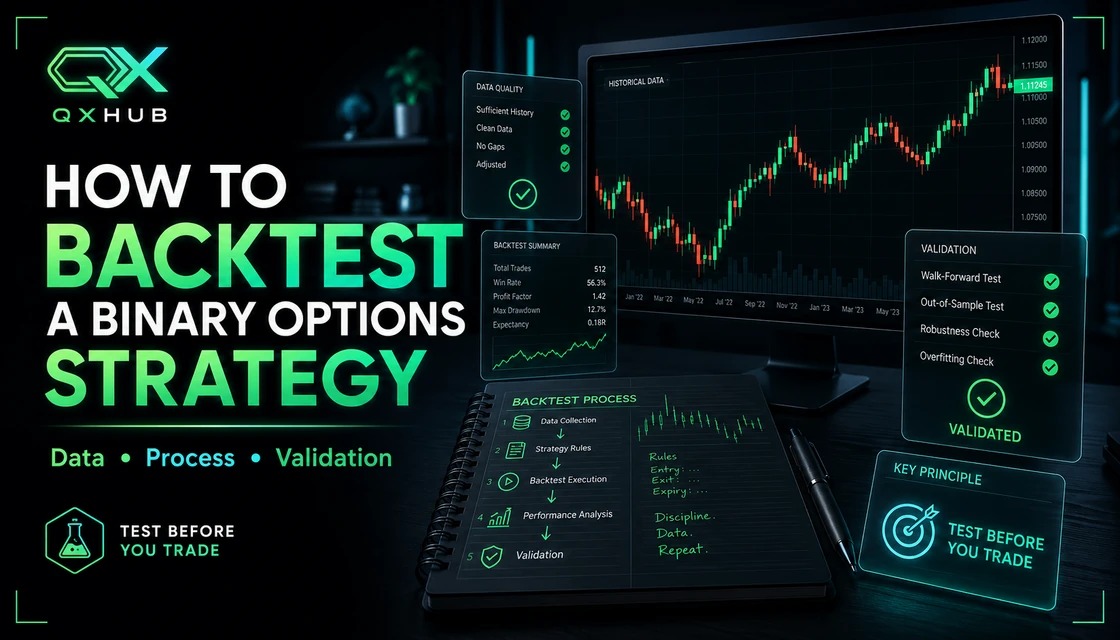
Learn how to backtest a binary options strategy with objective rules, historical data, payout-aware metrics, validation checks and a disciplined demo forward test.
Key points
- Historical results are evidence about a written sample, never a promise of future profit.
- A useful test records every eligible signal with the same entry, expiry, payout and settlement assumptions.
- Separate development from validation data, test sensitivity and then forward-test the frozen rules on demo.
1. What a binary options backtest can and cannot tell you
Backtesting applies fixed trading rules to historical candles and records what would have happened before real money is exposed. It can show whether a setup is objective, how results change by asset, session, expiry or payout, and how long losing sequences became in the sample. It cannot recreate all live conditions or guarantee future results, so the honest conclusion always names the rules, data and assumptions used.
2. Freeze the specification before opening the chart
Write the strategy version, assets, timeframe, timezone, date range, market filter, setup, trigger, confirmation, invalidation, entry timing, expiry and payout scenarios before you inspect outcomes. Replace subjective phrases such as 'looks strong' with conditions another person can check. Define ties, cancelled trades, missing candles and unclear quotes as well; an unresolved result is more honest than a convenient win.
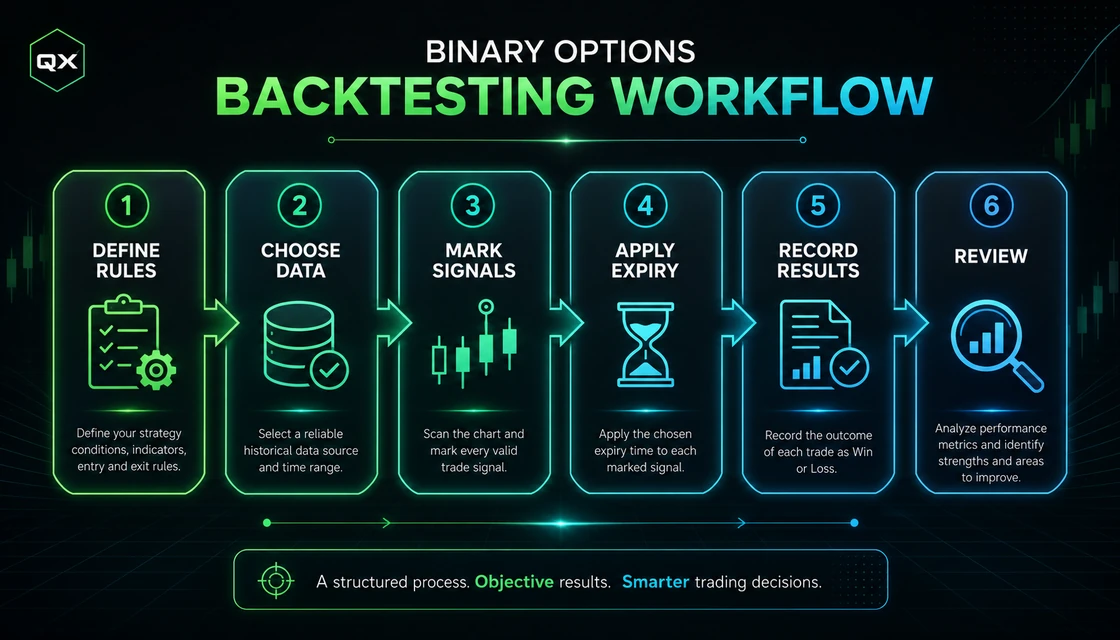
3. Follow a repeatable six-step workflow
Choose historical data detailed enough for the timeframe, move through candles from oldest to newest without looking ahead, mark every eligible signal, apply the same expiry and settlement convention, and record the result immediately. Save the evidence available at entry, not a screenshot built after expiry. Only calculate and segment the results after the predetermined sample is complete.
4. Measure payout-aware results, not only win rate
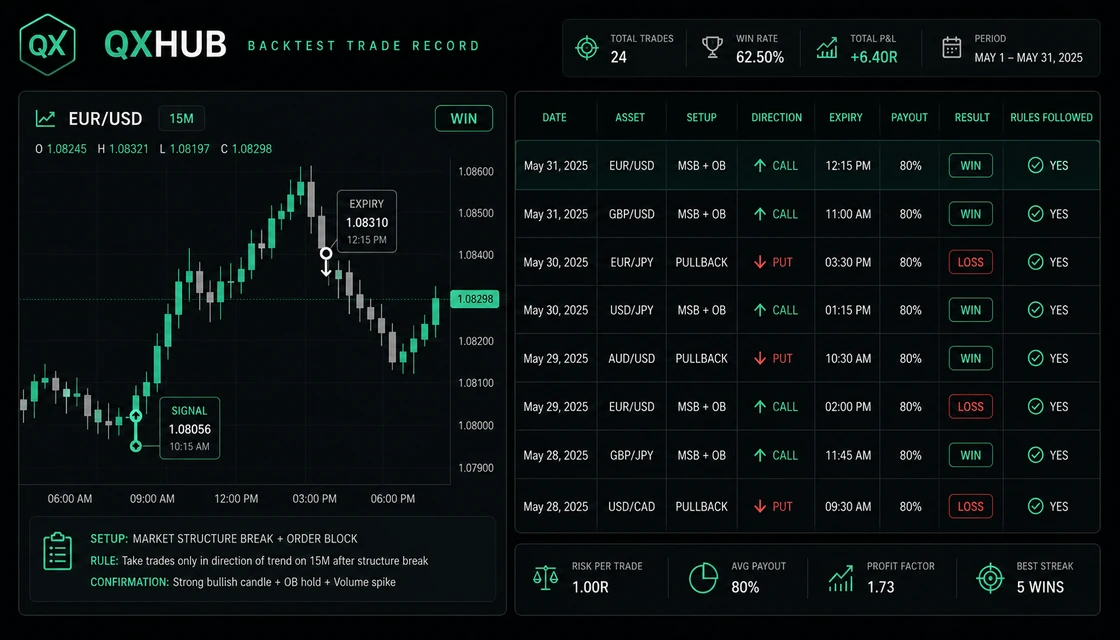
Binary options have asymmetric payoffs: a loss normally costs one full risk unit while a win returns the net payout. Track resolved win rate, break-even win rate, net result in risk units, expectancy, the longest losing sequence, data quality and rule-adherence rates. For an 80% net payout, break-even is about 55.56%; a win rate that looks attractive can still be insufficient when payout falls.
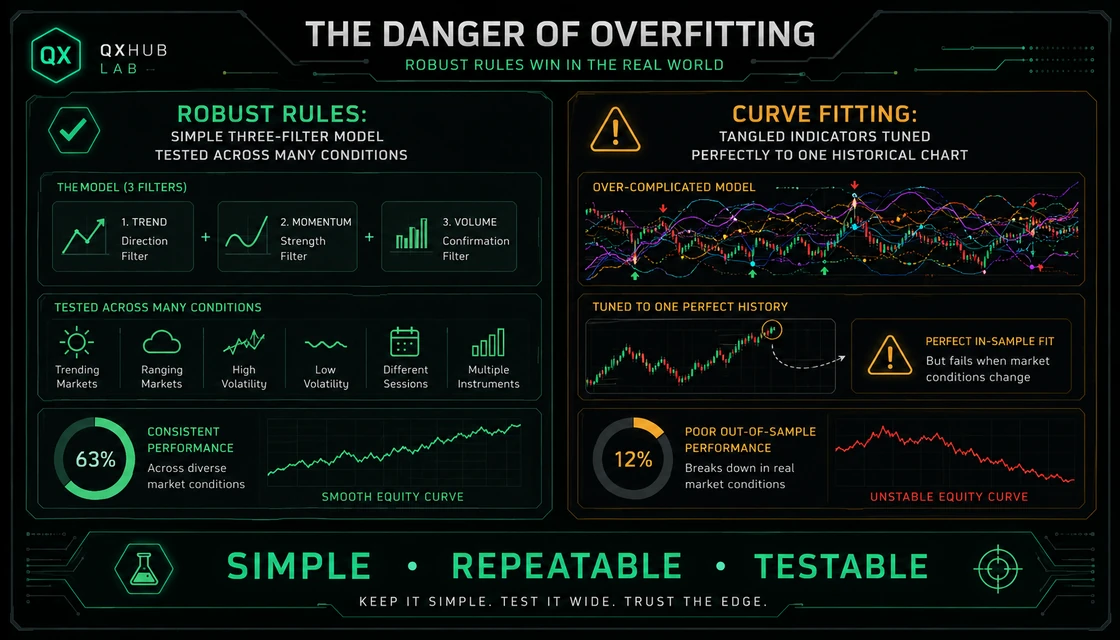
5. Validate instead of fitting the past
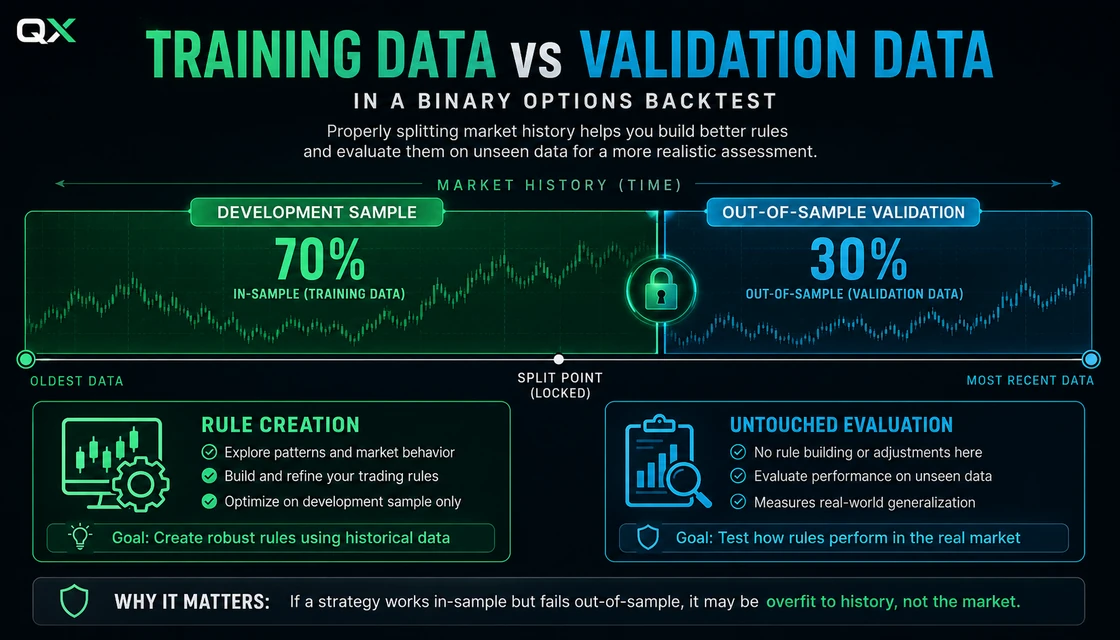
Keep a later part of history untouched while you develop the rules, then apply the frozen version to that out-of-sample period without adjustment. Check whether small, reasonable changes to payout, entry timing, expiry, assets and sessions destroy the result. Avoid look-ahead bias, cherry-picking, rule drift and Martingale-style stake escalation; robustness is more valuable than a perfect historical curve.
6. Move from research to a demo forward test
When the historical specification is frozen, test the same assets, sessions, entries, expiry and payout threshold on new data in demo. Record signals before the outcome, include valid signals you skipped and trades that broke the plan, and review only after the scheduled sample. A backtest becomes useful when it teaches disciplined research, not when it manufactures certainty.
Practical route for how to backtest a binary options strategy
Use this route after reading the guide. It turns how to backtest a binary options strategy into a repeatable routine: one idea, one chart check, one risk limit and one clear Quotex action instead of impulsive entries.
- Learn how to backtest a binary options strategy with objective rules, historical data, payout-aware metrics, validation checks and a disciplined demo forward test.
- A useful test records every eligible signal with the same entry, expiry, payout and settlement assumptions.
- Freeze the specification before opening the chart
- Follow a repeatable six-step workflow
Write the reason you opened this page in one sentence. Compare it with the guide's core point: Historical results are evidence about a written sample, never a promise of future profit. If the reason is still vague, stay on demo and sharpen the rule before touching a live balance.
Open one asset and connect the idea with the section "What a binary options backtest can and cannot tell you". Do not jump between markets. A clean rehearsal means the same timeframe, the same expiration logic and the same condition for skipping the trade.
Before any real click, set the amount, the daily stop and the maximum number of attempts. Keep this filter beside the chart: Trading involves risk. Compare the platform, read the rules and never trade funds you cannot afford to lose. A strong trader protects attention first, capital second and ego never.
If the checklist still holds, use the most relevant path: Registration. If the context changes, compare it with Fast entry or Android app. The best route is the one that matches the reader's goal, not the loudest button.
Use the guide like a trading plan
A visitor searching for how to backtest a binary options strategy usually needs a direct answer, not hype. This guide connects that question with Learn how to backtest a binary options strategy with objective rules, historical data, payout-aware metrics, validation checks and a disciplined demo forward test. and keeps the focus on the decision a beginner actually has to make next.
A calm trader does not turn one paragraph into a signal. Read the key points, compare them with the chart, then ask whether timing, amount and risk still agree. The strongest idea in this page is simple: Historical results are evidence about a written sample, never a promise of future profit.
When the idea is clear, move in order: open the right Quotex route, practise the workflow on demo and only then decide whether Registration, Fast entry or Android app fits the session. If the rule feels rushed, the better decision is patience.
- A useful test records every eligible signal with the same entry, expiry, payout and settlement assumptions.
- Separate development from validation data, test sensitivity and then forward-test the frozen rules on demo.
- Trading involves risk. Compare the platform, read the rules and never trade funds you cannot afford to lose.
Quick answers
How should a beginner use how to backtest a binary options strategy?
Treat how to backtest a binary options strategy as a decision filter, not as a signal by itself. Start with the page's main idea: Historical results are evidence about a written sample, never a promise of future profit. Then check one chart, one timeframe and one amount on demo before any real-money step.
What should I check before applying What a binary options backtest can and cannot tell you?
Check whether the market still matches the section "What a binary options backtest can and cannot tell you", whether A useful test records every eligible signal with the same entry, expiry, payout and settlement assumptions. is true on the chart and whether your amount fits the planned risk. If one part is missing, skipping is the professional choice.
Is how to backtest a binary options strategy enough to open a trade?
No. The topic can help you read the situation, but a trade still needs timing, expiry logic, risk limit and a reason to stay out. The useful line from this guide is: Separate development from validation data, test sensitivity and then forward-test the frozen rules on demo.
Which Quotex route fits after this guide?
The clean next route is Registration. If the task is only access or device setup, compare it with Fast entry and Android app. The route should match the reader's intent, not pressure the trade.
Next step
Choose a topic by task: brokers for platform selection, guides for access, strategies for setups, risk for discipline and investing for longer market logic.